The Weekly Dis
Rest in peace, Mike Cornell, and thanks for showing us how to live.
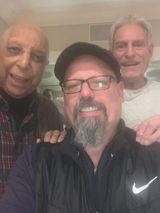
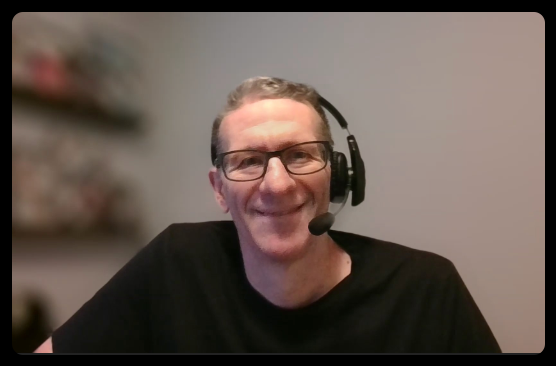
As I age, the concept of time looms ever larger. When I gather with my friends, a 60-ish-plus crowd, we tend to whisper or yell at the clouds. The past takes on a certain tint, an idealized glow, as in the paintings of Norman Rockwell or the poetry of Robert Frost.
They saw culture changing rapidly and felt displaced in modernity. Their art reflects that feeling that Mark Twain expressed when he said, "I find that the farther I go back, the better things were, whether they happened or not." Remember?
While this feeling is certainly universal – "Those were the days," or some version of it, is found in 7,139 languages – I would submit that there is a certain, well-defined strain of it in America, which is relatively youthful and allegedly "exceptional." I think that is, in part, what Rockwell and Frost wrestled with in their art.
There is a powerful allure to youthfulness and exceptionalism, especially as one ages and these things fade. It's human. We want to reclaim the time we once had, because we want more time.
The past expands as the future shrinks. Those were the days.
I sat down to write about Mike Cornell, who died on Sunday, the victim of ocular melanoma. He was 52. The thicket that I traversed before I got to the buried lede is my way of processing.
I often wonder why cancer takes wonderful people like Mike Cornell while others who are older and wicked are spared. The wicked old people seem to be everywhere now. Was it always thus, or is my mind playing tricks on me? Nostalgia, as it has been said, is a seductive liar.
I didn't know Mike well, but we corresponded on social media and via text. I met his family, and my heart aches for his wife Lori and their children. They were all robbed.
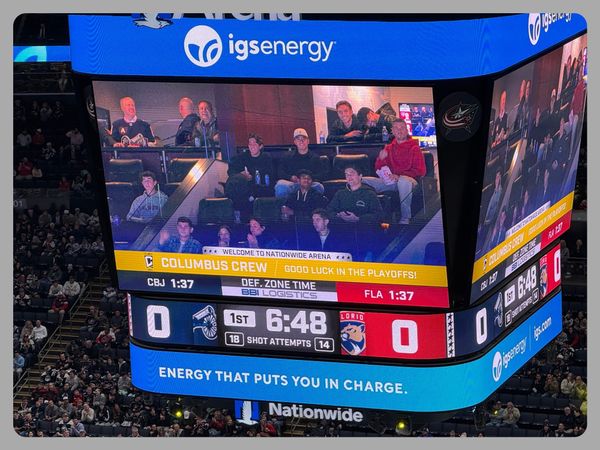
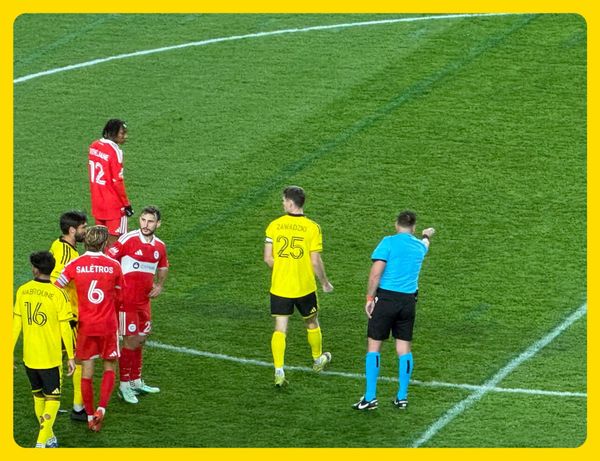
In July, I had Mike on my podcast. I had him on because he was a Day 1 fan of the Crew and the Blue Jackets, and he gave these teams his heart – to be filled and broken – for nearly his entirety of his adulthood. He knew chapter and verse of their histories. They were a part of his life – not nearly as important as his immediate family, but right up there with, say, his closest cousins.
I had Mike on because I was curious what the fandom meant to him in the final stage of his life. That's the gauche way to put it. Mike was on the clock and, like the rest of us, he didn't know when it would run out. Unlike the rest of us, however, he knew the mechanism was soon to fail. He knew it was mere months away.
Ocular melanoma, or eye cancer, is a rare and pernicious disease. When Mike was first diagnosed in 2017, he set a goal – to see his children graduate from middle school. He reached that goal and set another – to see his children graduate from high school. He reached that goal and set another – to see his children graduate from college. He didn't make it but, by god, he aspired.
Mike said in July that it was a miracle, really, that he reached the first two goals. It was, and it wasn't, I think. He took part in clinical drug trials, which is to say he leaped into the unknown with his doctors. In his first trial, he was administered a lung-cancer drug because, what the hell, let's give it a shot. Ultimately, he was in three trials, and would have taken part in more had federal funding not been cut.
Under the best of conditions, those diagnosed with ocular melanoma can hope for five more years of life. Mike fought like a champion for nine years. Nine years. Over that span, he became a fierce advocate for research and drug trials for ocular melanoma, which, because of its rarity, is an oncological afterthought.
Mike faced down death for nearly decade. He managed to get in a long-planned trip to Europe with his wife near the end of September. He got to see the Crew play for another trophy, the U.S. Open Cup, and then he got to see the Crew go 8-1 down the stretch and qualify for the playoffs. He got to see a blue tsunami midterm election, which for him held the promise of future federal funding for drug trials, among other things.
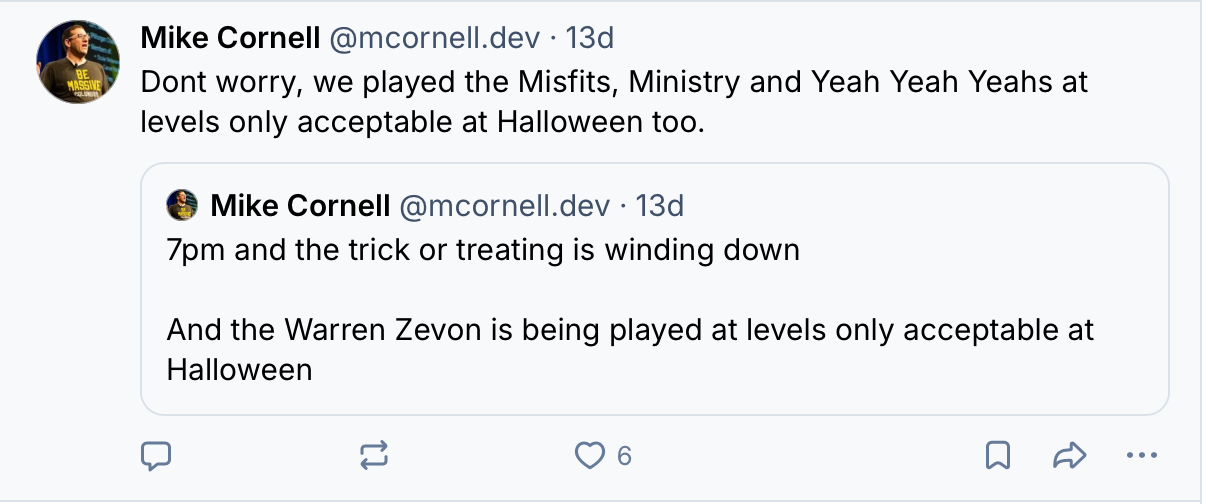
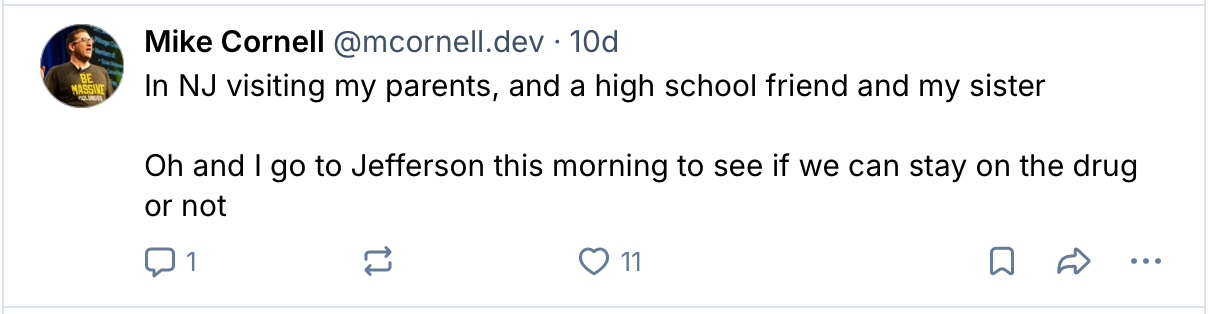
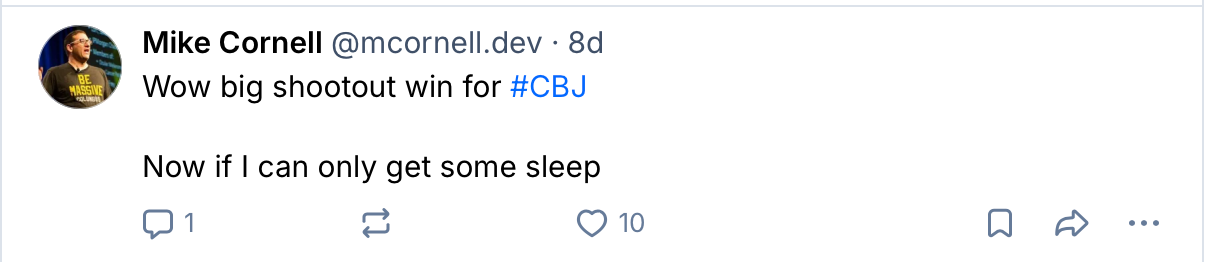
A few of Mike's final skeets on BlueSky: Halloween night, back to South Jersey to pay respects, watching a Blue Jackets victory.
I asked Mike in July whether his perception of the teams he rooted for had changed as he was faced with his own end. Mike was passionate about the Blue Jackets and the Crew. What does that mean, really? I was curious. Gauche?
Mike understood exactly where I was going.
"I was thinking about this the other day," he said. "Like ... since this happened, how lucky I've been, with at least one of the teams (the Crew). ... I was thinking about this (in relation to) the time when I'd just gotten metastasis news in 2023. They were making the playoff run to win the (MLS) Cup.
"I figured out a way to get MLS Cup tickets. I got the tickets, and I was on a plane the next day to go back to Philly to get another treatment. It was one of those things that was ... a little surreal. It's something that brings joy into your life. Even when the team isn't doing well. Sports is something that hopefully is bringing joy to your life, and if it's not sports, it's some other thing that's bringing joy into your life.
"Having that joy to hold onto is extremely important. To call it a distraction isn't the right (word) for it."
I'm sure Mike had his moments when he cursed his fate. When he did, he said his wife Lori was there to give him a gentle slap. That's not how he put it, but how I took it.
Mike would lift himself up and get back to searching for whatever joy he could find. Right up to the end, that is what he did. He searched for joy, and tried to hang onto it.
That is how to live.
Thank you, Mike.
Rest in peace.
Here's the whole pod.
If you wish, please contribute: