The Weekly Dis
Today, on the heels of the Timothy World Cup Tiers, we have the Patrick Tiers, and a family feud

The Disrespected and Budd Dairy Food Hall are teaming up for a World Cup event/watch party on Friday, June 19, when the U.S. Men's National Team plays Australia. It's a 3 p.m. kickoff. The Crewcible podcast will be on-site, recording pre-game with special guests. Budd Dairy -- located at 1086 N. 4th St. -- also has some things cooking. Put it on your calendar.
The U.S. Men's National Team romped to a 4-1 victory over Paraguay in LA last night. Our Technical Director, Patrick Arace, will have some sort of technical breakdown in Monday's post.
Patrick's World Cup tiers – which are not quite like Timothy's tiers – appear below with his written breakdown of the top 20.
I wanted to use this particular space to continue to hype the next Disrespected event: A podcast/watch party at Budd Dairy on the afternoon of Friday, June 19, when the USMNT play their second game in group play. The opponent is Australia, a plucky, young bunch of Socceroos on the come. We'll be doing stuff before, during and after the game, and the good people at Budd Dairy have their own ideas to bring to the fore, as well.
I hope to see everyone there to support local, independent, Disrespected Media. And our Yanks.
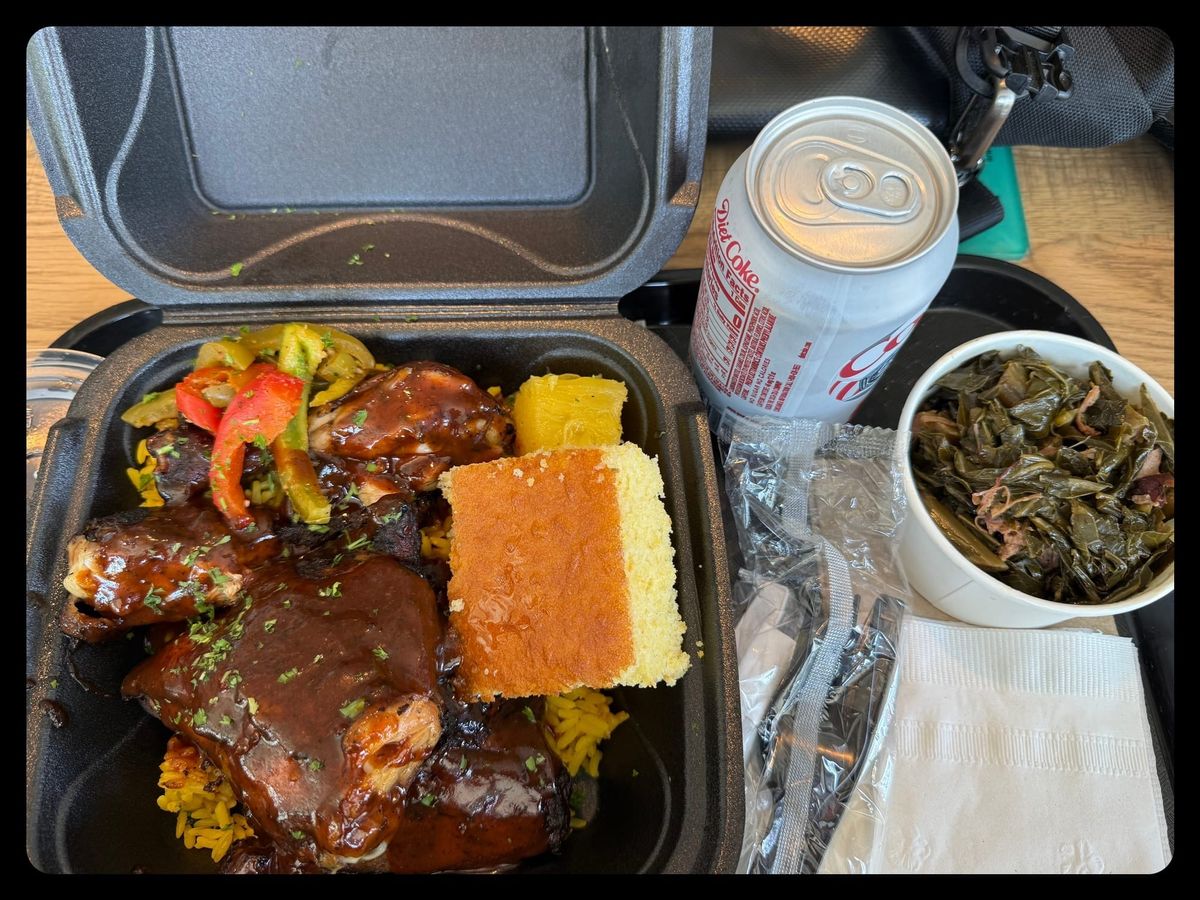
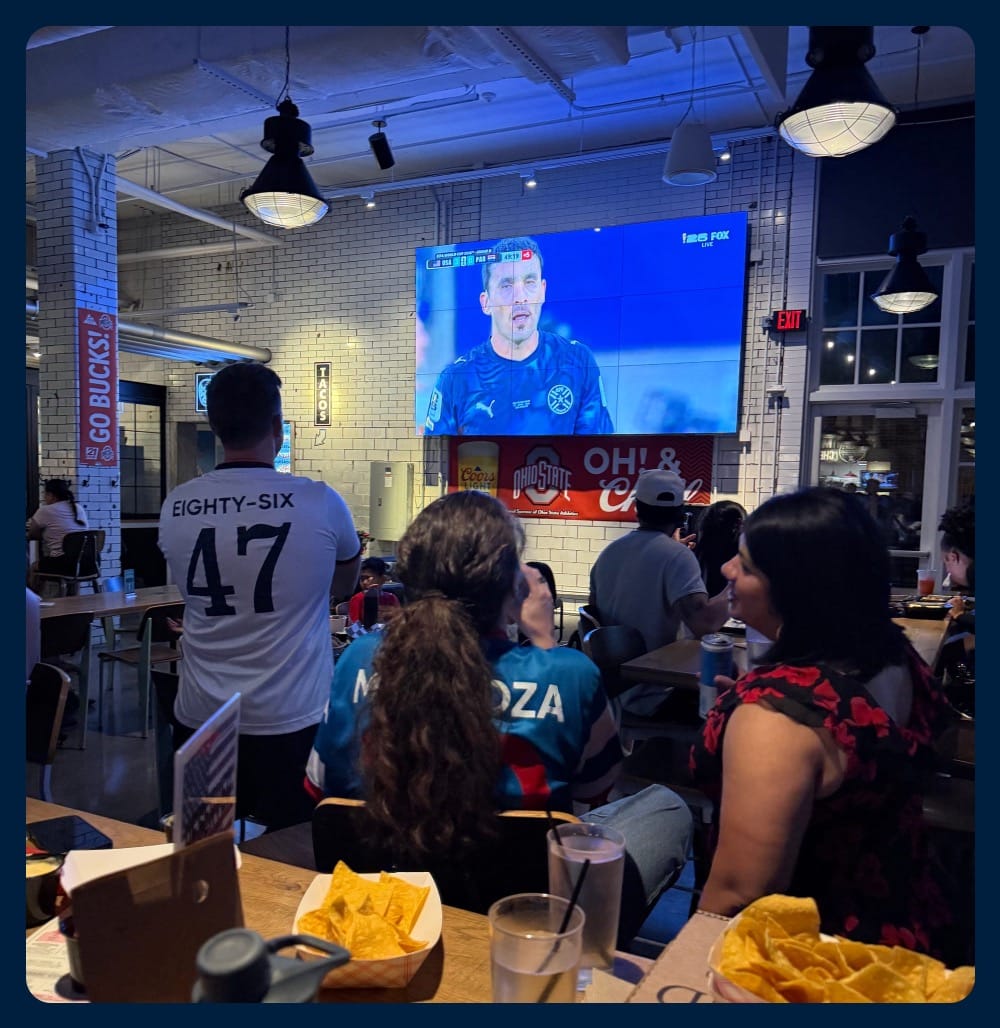
We did a little warm-up last night. Great venue, terrific food, long stretches of barrail. Oh, my.
The Patrick Tiers
Disrespected Media's Technical Director weighs in on his top 4 tiers
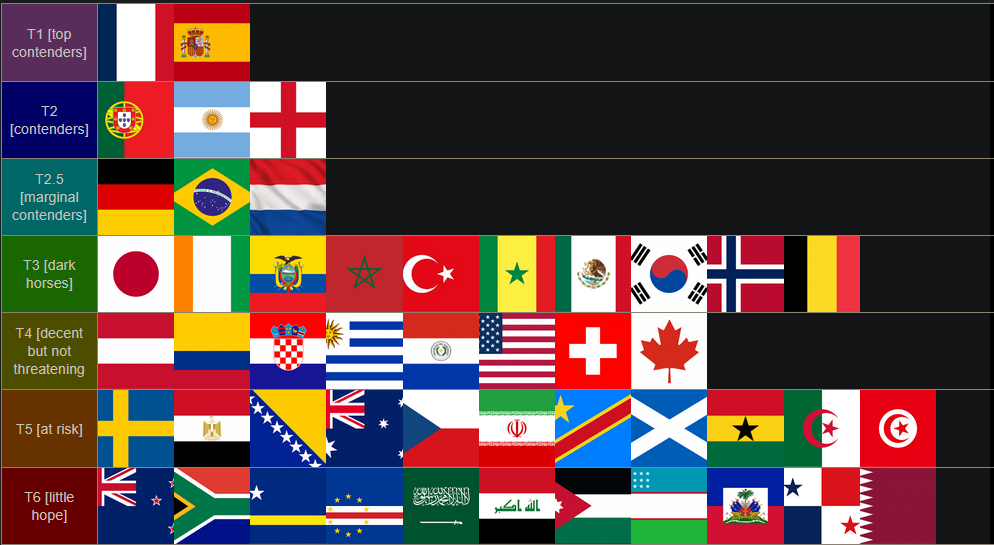
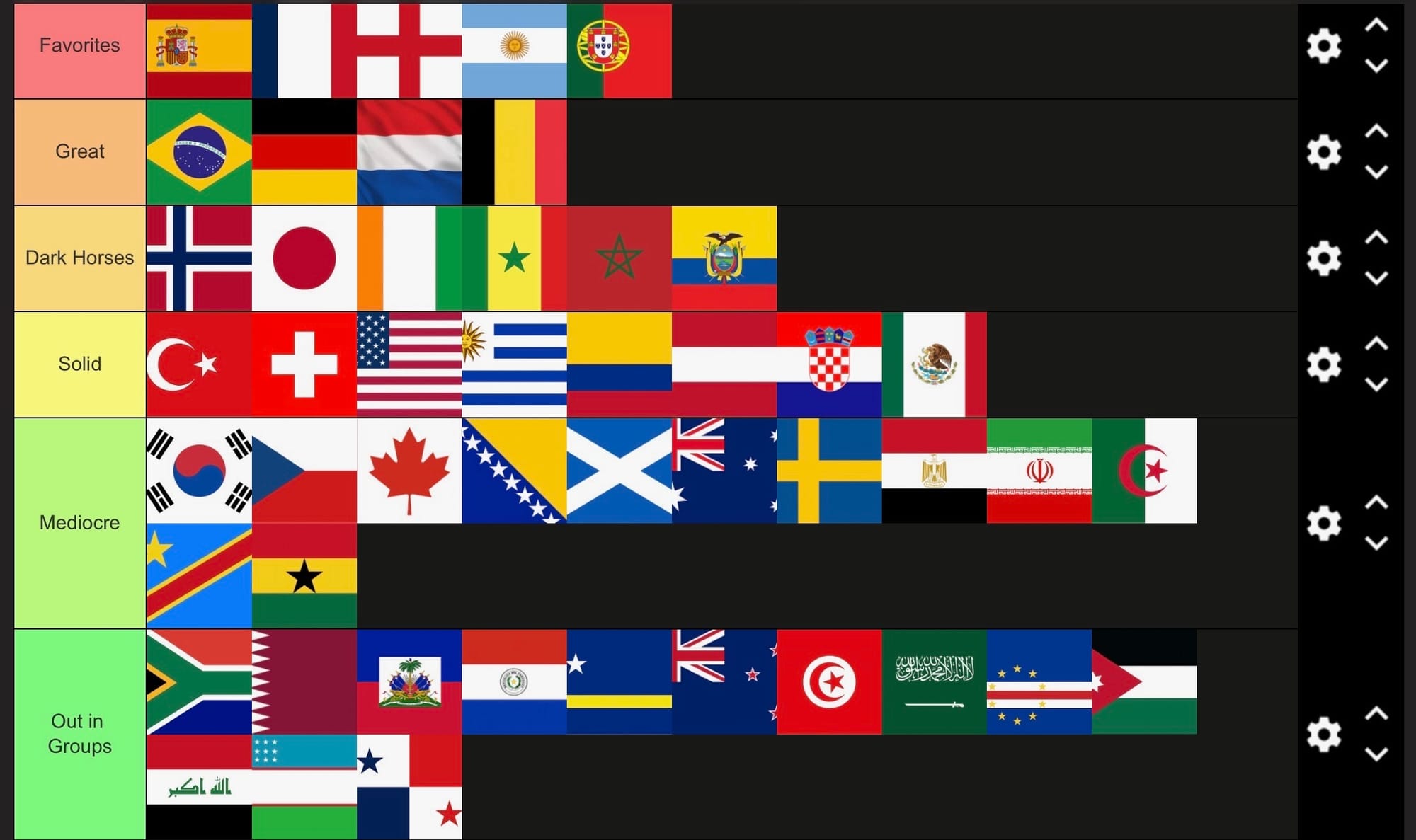
Patrick Arace, Disrespected Media's Technical Director, has a different view of tiering from Timothy Arace, DM's Executive Producer and First Team Video Coach Analyst. Patrick's tiers at left; Tim's on the right.
Tier 1
These two aren't just at the front of the pack of nations but roam ahead of it, hence their own tier. Spain have the best midfield and a club-like cohesion among their core players while France sport the most potent attack and stalwart defense and can leverage the nous of their venerable water-carrier Didier Deschamps on the touchline. France to me grade an eyelash ahead on composition as our current era prioritizes box play, but the old #8 in me is pulling for the Iberians to teach the world once more how to play with the ball on the ground...where it belongs.
Tier 2
England on paper grade as worthy of T1 status, but as with their governments since c. 1905 they did it to themselves with head-scratching squad selections (no Trent Alexander-Arnold, Morgan Gibbs-White, or Phil Foden? Cole Palmer isn't really that creative...). Despite the wiles of the evergreen Harry Kane carrying both the playmaking and scoring load I can't help but not trust them until further notice.
The other two are arguably punching above their weight – Portugal being a less-incisive version of Spain built around quiet suffocation in possession, Argentina as holders coming in with a huge target on the backs and some underperforming players in tow. Both carry aging greats. Messi is much better than Ronaldo at this point, but Big Crit has a bit stronger of a side behind him (assuming he doesn't blow up morale first behind the scenes), so call it even.
Tier 2.5
Three traditional powers on diverging trajectories make up the semi-contender tier here. At least they all qualified...wherefore art thou, Azzuri? For the first time since I've been following the world game (2006) Brazil come into a World Cup adequately rated. I have not been seeing much smoke about the Seleçao as a top contender and with good reason as they are patchy. We are far from the days of 1982, when Brazil could leave two of their three top attackers behind and come within a freak Paolo Rossi hat-trick of likely picking up the trophy. In other words the elite talent pool is shrinking relative to the population size and game interest. I trust Don Carlo on the touchline more than Thomas Tuchel, though I've long felt that the renaissance of La Joga Bonito needs to come from a Brazilian manager, i.e. the CBF shouldn't have quit so soon on Fernando Diniz.
Fellow titans Germany, on the other hand, are cranking out youth talent again after a decade delay, largely on the Iberian model of valorizing technical ability and mental sharpness first and foremost in youth scouting coupled with a streak of innovative managers in the domestic game (Klopp, Rangnick, Nagelsmann). Die Mannschaft might be a bit green around the ears for this particular tournament but in 4 years they will likely be a top contender with Florian Wirtz and Jamal Musiala hitting their peak years and some more support (and perhaps some more traditional Deutscher Teamgeist) in defense and attack.
Die Oranje, Netherlands,would be higher if not for their pitiful attack. I considered dropping them into T3 because even last World Cup I was struggling to grasp how Memphis Depay was still starting...and sure enough there he is 4 years later...but, hey Arsenal have shown us lately [as well as Netherlands themselves in 2010] how effective pure terrorist ball can be, and the Dutch certainly can wield world-class defenders and midfielders and grind out results, as they say in Islington. A far cry from the Totaalvotebal days of Cruijff, Krol, Neeskens, van Hanegem, Rensenbrink, and Keizer, or the acid house-era Gullit, Rijkaard, van Basten, and Koeman side, when the Dutch played with a precision on the ball unrivaled anywhere in the world. As keen neutrals we can lie in hope that they re-learn those lessons from the Spanish and from Cruyff postmortem.
 Michael Arace
Tier 3
This is a whole tier where you look at a given side and think that's an interesting team.
The top three CAF teams are all comparable. From most to least experienced: Morocco suffered a couple of bad breaks, losing load-bearing pieces in their lineup immediately before the tournament, but they will be extremely hard to play against, have one of the world's top players in Achraf Hakimi, and have proven they can win in big tournaments. Sénégal are stacked at every position and feature a good mix of explosiveness and nous [I've missed watching Kalidou Koulibaly and Sadio Mané the past few seasons as they print their petrodollars]. Côte d'Ivoire play a balls-to-the-wall direct style with a lot of attacking flair and physicality, though the kids up front will be leaning on Franck Kessié (also marooned in Audi Arabia and missed) and Ibrahim Sangaré to clean up the messes behind and provide steady guidance.
Hosts Mexico wield an mix of a veteran team and a young starlet ready to break out in Gilberto Mora. They're a solid enough team, but they're a tier above their NA rivals because their home crowd advantage is probably larger than the US's and Canada's combined, and could spell doom for opponents without sufficient composure. From the AFC, Japan continue to improve their talent base as the sport has started to flourish there. I don't think they'll miss a beat without Mitoma Kaoru as they are disciplined and can score team goals through movement. Korea Republic also keep improving and always are stout without the ball, though their attacking play tends to be more direct and physical whereas Japan's is based around close control and movement. Son Heung-min leads a dangerous front line and should be motivated to make what might be his last international tournament count. Ecuador are a bit like Morocco – very difficult to score against; high floor, lower ceiling than some teams behind them. Enner Valencia is not getting any younger at striker at 36, though he continues to play decently for Pachuca in Liga MX. If they and Türkiye could merge squads, the joint team would be tournament contenders as the Anatolians can go wild scoring goals with Kenan Yıldız and Arda Güler but struggle to button up matches.
The two Uefa teams are headed in different directions – Norway up, Belgium down. Skiing's hold as Norway's hegemonic sport has been partially broken as the country has produced players of the caliber of Martin Ødegaard (one of the tactically-best players in the world) and Erling Haaland (Mr. Raw Milk and Flank Steak, the physically-best player in the world) recently. The Eurocrats, on the other hand, failed to maximize on a golden generation and are now stuck with Jérémy Doku pulling around a bunch of guys without any titles going on about the good old days. That being said, they're still talented enough to ruin a good team's tournament.
Tier 4
Strictly speaking, there isn't a huge degree of difference in front-line quality between T3 and T4 sides, the T3 sides just have better balance, depth, and/or external factors working in their favor.Out of the three Uefa nations two play diametrically-opposed styles – Austria under Ralph Rangnick will Gegenpress you to death while Switzerland as befitting a nation of nuclear physics and international money-laundering will keep things tightly locked-up. On paper the old international money-launderers, the Austrians, would have the edge as they have decent options throughout the team but Rangnick's style is hard to play physically in the unrelenting heat of an NA summer and hard to execute tactically without the elaborate training sessions afforded to a club manager. Croatia meanwhile has found success in recent tournaments and don't carry any major holes in their lineup so long as the 40-year-old wonder Luka Modrić (seriously, doctors should study his CV system) can endure the temperatures' rising past 30 degrees C.
The US and Canada both stand a good chance at winning a knockout round, but making it there will be a different story as Canada boast a cupcake group while the US has a decently-challenging group. There was some selection controversy with the Americans as some think the #6 role has an Aidan Morris-sized hole and there are too many fullbacks on the roster, but the real question is over the #8 role – Reyna or Tillman? For me, Tillman is more well-rounded and reliable, so I hope to see him, but Pochettino seems to prefer Reyna. The Maple Leaf's best team, meanwhile, essentially picks itself.
In the CONMEBOL column, Colombia and Uruguay are both pretty old, but still dangerous if their veterans can find their legs. Colombia seem a bit stronger, but they're even older all the same as Cucho Hernandez continues to sit on the periphery of the squad. Both are off of their levels from last decade though many people seem to like Colombia this tournament as they have a lot of star power. Paraguay lack the dazzle of a Valverde or a Diaz but this looks to be the strongest Paraguayan side since the 1998 version that hosts and eventual winners France needed extra time to knock out. They're hewn of granite without the ball and have a couple of dangerous options going forward. They might well give the US team fits and in fact I'd be tempted to move them to T3 if not for the fact that I already uploaded the screencap...
"The Greatest Jazz Concert Ever"
I dropped a reference to this album into my lede in Friday morning's post. "Jazz at Massey Hall," as it is commonly known, is, well, commonly known. It is referenced as "The Greatest Jazz Concert Ever." No deep cuts here.
I love jazz. I leave room for its evolutions over the decades, right to the present. But I always return to the era when swing gave way to bebop. The experimentation and improvisation don't always make sense to me – I need to study more – but the imagination and the virtuosity never fails to stir my soul.
What is so glaringly extraordinary about "Massey Hall" is the confluence of giants. If your thing is to look up lists, you'll find Charlie Parker, Dizzy Gillespie, Charles Mingu, Bud Powell and Max Roach among the greatest practicioners of their respective instruments.
Parker is the greatest, and most influential, saxophonist in the history of music. At Massey Hall on this night, he is playing a white acrylic (plastic) saxophone because his horn was in hoc. Mingus is one of the most important composers of the 20th century, up there with Aaron Copeland and George Gershwin, Duke Ellington and Miles Davis. I think Max Roach is the greatest drummer who ever drew breath, but then there's Art Blakey and ...
They never rehearsed for this gig. They talked a little bit on stage. The auditorium wasn't full – there was a heavyweight championship fight between Rocky Marciano and Jersey Joe Walcott on TV that night – and ...
Liner notes from Presto Music:
We have a record of this historic night thanks to Charles Mingus’ idea to record the concert using a portable tape recorder. Later in the autumn of 1953, he released Jazz at Massey Hall on a 10-inch LP with Debut Records, his label co-founded with Max Roach. Parker was listed under a pseudonym as "Charlie Chan" (using his wife’s name) due to a contractual tie to Mercury Records at the time. After the concert, Mingus discovered that his playing was barely audible in the live recording; his solution was to overdub his bass lines, resulting in speed discrepancies in an attempt to salvage what he could. The bass player was also unhappy with the lack of space for his own solos. As an added insult, due to the low turnout, ticket sales could not cover the musicians' fees; Parker was the only musician paid that night, and Dizzy Gillespie stated he didn’t get paid "for years and years."
Since the original release, the album has been reissued to include a vivacious drum solo by Max Roach (which opened the second half of the concert) lasting nearly four and a half minutes, entitled "Drum Conversation," showcasing his intellect and creativity as a drummer. With Powell and Mingus back on stage, the trio progressed through a collection of what the Great American Songbook has to offer: "I’ve Got You Under My Skin," "Embraceable You," "Sure Thing," "Cherokee," "Hallelujah," and "Lullaby of Birdland." A 70-year commemorative release from Craft Recordings, Hot House: The Complete Jazz at Massey Hall Recordings, contains all the tracks performed that night, with and without the bass overdubs.
The Massey Hall concert stands as a powerful testament to bebop's zenith. It was a unique convergence of these jazz giants, marking the last recorded collaboration between Parker and Gillespie. This moment snapshot when the potent wave of bebop was at its peak, just before the genre began to splinter into new and exciting forms. Over 70 years since that day, The Quintet: Jazz at Massey Hall has gained accolades and notoriety, becoming inducted into the Grammy Hall of Fame in 1995. The history and fables behind the live recording are enticing; however, the magic remains within the music, and listening to the masters at work is to be cherished forever. As Don Brown, an attendee of the concert, put it: "Out of anarchy and chaos, musical genius prevailed."
There are better recordings available. If you're interested, here's a way to download:
 Dan Spirrett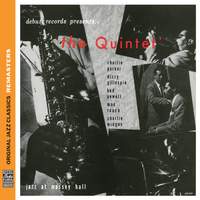
Thanks for reading. If you're enjoying what you see and you are of a mind, click on the link below and leave a tip. If you've yet to subscribe, consider making a small hop over a paywall. It'll help keep local, independent media disrespected. You can follow me @MichaelArace1.bsky.social. Have a nice day.
Click below to leave a tip. Thanks.
 Michael Arace